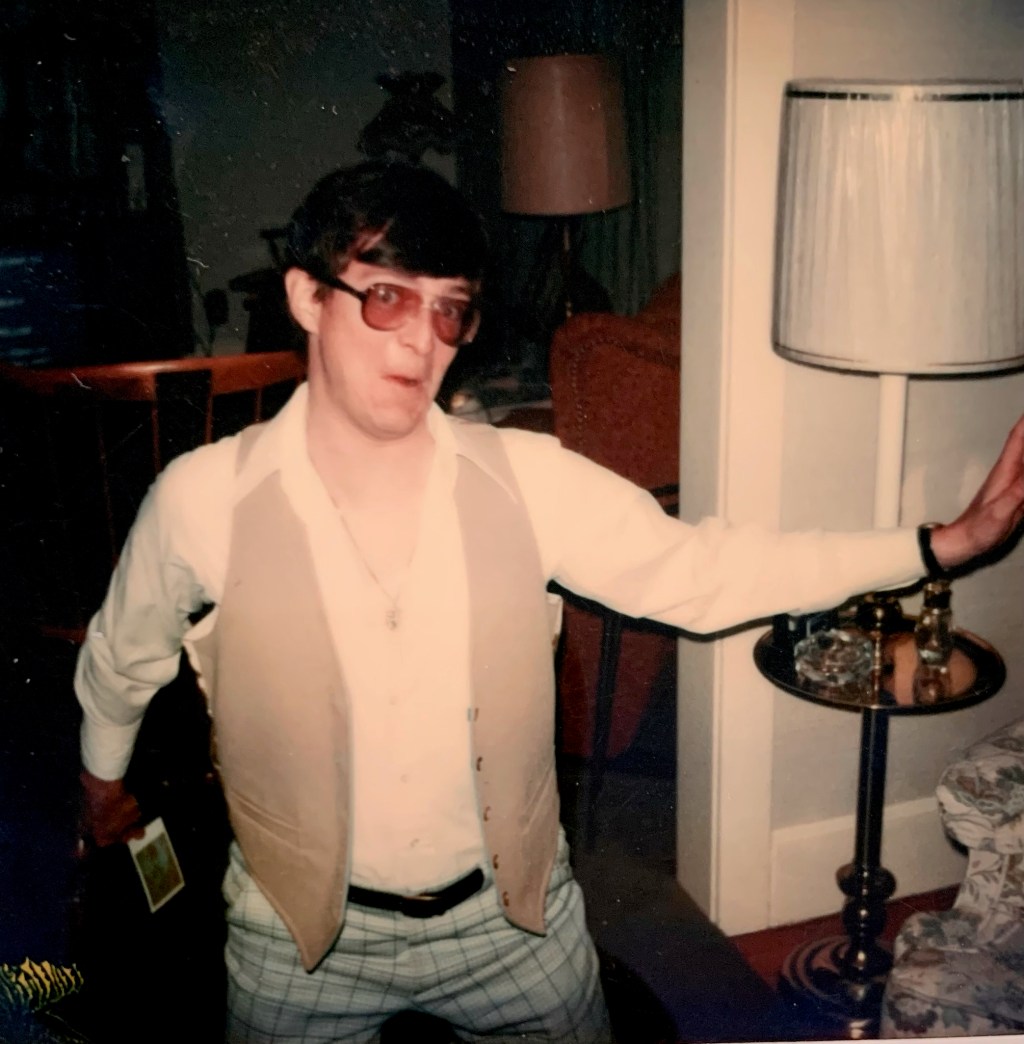
Fabulous. I graduated three times (with awesome distinction), got my first car and my first kiss, started my first full-time job, and grew seven inches. It was just a peaceful decade, a great time to be alive.
Seriously, though, it was a phenomenal ten years in our American history with successes, discoveries, change, unrest, protests, threats, and heartaches.
My first connection to the decade occurred In the late summer of 1960 when I waited on Main Avenue with a throng of West Scranton residents for the motorcade of John Fitzgerald Kennedy, the Democratic nominee for President and like me an Irish Catholic. Sitting on top of a convertible with outstretched hands his fingers barely touched mine as the motorcade passed my spot. After four years of Harry Truman and eight years of Dwight Eisenhower we were so happy that a younger man with such inspiring energy and exuberance was elected to be our next President. He only served as President for 35 months, but I remember that he established the Peace Corps and the Apollo space program, setting an incredible challenge to put a man on the moon by the end of the decade. While his presidency was marred by an ill-fated invasion in Cuba to remove Fidel Castro from power it also will be remembered for how he stared down Nikita Khrushchev and got Soviet missiles removed from their placement in Cuba within 90 miles of U.S. soil. For days during that crisis we were glued to the television for updates on that situation which brought us to the brink of nuclear war.
In November 1963 the country witnessed the horrific assassination of President Kennedy and the events which followed. Everyone alive then most likely remembers where they were when JFK was shot. I was on my way home from a class at the University of Scranton. I stopped at a bank to deposit money from a bowling league of which I was Treasurer. All three ladies in the bank were crying and it was they who told me about the assassination. As I drove to my house about six blocks away I saw my grandmother out on the front porch listening to the radio and also crying. Two days later, while my sister and her husband were attending Sunday Mass, my father and I were babysitting my 9-month nephew and saw in real time on TV the actual killing of JFK’s assassin by Jack Ruby. It was all so surreal.
There were, of course, two other tragic assassinations in the ’60s, both in 1968 – Martin Luther King, Jr. in April and Senator Robert Kennedy in June. The memory of standing on the rooftop of Gibson Hall on the Catholic University’s campus watching the fires burning 14 blocks away following the shooting of Dr. King will always be etched in my mind, as will the adventure of seeking out and representing a rioter/looter in the D.C. jail holding cells later that night. Bobby Kennedy was shot in Los Angeles the night he won the California presidential primary and while that happened around 3 a.m. EDT I happened to be awake because I was studying for a law school exam the next day and thus I saw the live TV coverage.
The Vietnam war started in earnest at the beginning of the ’60s and raged throughout the decade. It was, of course, an unpopular war (and as it turned out for the U.S., an unwinnable war). I definitely did not want to be drafted. If you were going to graduate school it was possible to get a 2-S draft deferment and that is the reason I applied to law school. I had to undergo an army physical in any event and due to my hearing loss I was classified 1-Y, which basically meant that I would be drafted only in a national emergency. If I were drafted I suspect I would be given a desk assignment for fear I wouldn’t hear the bombs dropping on the front line, I guess. I think it was the right answer. I would have made a lousy foot soldier.
Lyndon Johnson was able to get a number of domestic bills passed after he succeeded JFK as President, including civil rights, voting rights, and medicare legislation, but frustrated by the escalation of the Vietnam conflict he delivered a shocking Sunday night announcement in the Spring of 1968 that he would neither seek nor accept a nomination for another term as President. That opened the door for another Kennedy-Nixon presidential contest which everyone was excitedly anticipating until Bobby Kennedy’s assassination in June. What followed was a summer of civil and racial unrest. It was a long hot summer with riots and protests in several major cities, culminating in demonstrations and conflict with law enforcement at the Democratic convention in Chicago. There were several large marches, including the March on Washington for civil rights during which Dr. King delivered his famous “I have a dream” speech, the March to the Pentagon in protest of the Vietnam war, and the Poor Peoples Campaign against poverty. The latter resulted in the erection of thousands of tents on the National Mall that were occupied for over a month in what was called “Resurrection City” which my roommate and I visited.
The most tumultuous and divisive events of the ’60s occurred in the latter part of the decade when I was living in D.C., so I had first-hand exposure to some of them. To this day I think back to that decade and ask myself how did we ever survive it as a country. At least, though, the decade ended in 1969 on several good notes – we did put men on the moon in July, there was a hugely successful and peaceful music festival at Woodstock in August, and I passed the D.C. bar exam in November!
 'Tis The Drink Talking